Honda Geneva Motor Show Press Pack
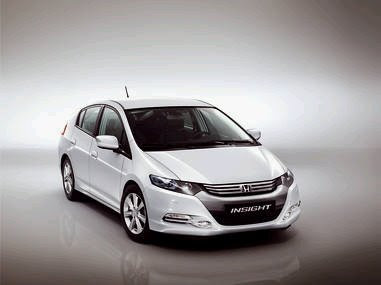
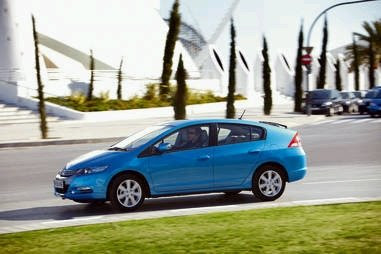
Honda Insight Hybrid makes EU debut
New Accord 180 PS Diesel Type-S
Honda S2000 Ultimate Edition
CR-Z Sports Hybrid Concept and FCX Clarity Show Honda's Future
ASIMO, Honda's advanced humanoid robot, will help launch the all new Insight Hybrid at the 2009 Geneva Motor Show.
The new Insight, which will makes its European debut at the Show, has been designed to offer a practical five-seat family car at an affordable price with excellent fuel economy and low CO2 and other emissions.
Honda's latest hybrid vehicle revives the Insight nameplate which was first used in 1999. It also marks a return for Honda to producing hybrids in a dedicated aerodynamic body, designed to optimise the performance of the efficient petrol-electric hybrid drivetrain.
The Insight combines an optimised 1.3 litre i-VTEC engine with a compact thin electric motor. The electric motor acts as a generator during deceleration, recovering energy that is otherwise lost as heat from the brakes. This energy is stored in the batteries and then used to support the combustion engine during acceleration to save fuel and increase efficiency.
The Insight has been designed to give good real world emission and fuel economy figures. Its key element is the Eco Assist system that is fitted as standard. The upper instrument cluster where the speedometer is sited, features a colour changing ambient light that illuminates green when driving ecologically, blue/green when the car is being driven acceptably and blue when driving with less regard for economy.
The ambient lighting of the speedometer combines with a bar diagram which is more than a simple instantaneous economy meter. The display in the centre of the rev counter shows how aggressively the driver is accelerating or braking and encourages the driver to stay towards the middle with lighter more progressive use of the brake and accelerator pedals.
To chart progress, during each journey leaves will appear on the bare stems of the plant icons on the centre meter if the driver is matching the ecological driving conditions ideal.
The display also keeps the driver informed of their progress through the stages of ecological driving over the lifetime of the car. At the end of each journey the driver is given a score which they can build up over time to chart progress. Over time the driver will be presented with trophy symbols for continued economical driving, or a wilting plant symbol if they regress into less efficient driving.
The Insight has been designed to offer a practical family car at an affordable price with excellent fuel economy and low CO2 and other emissions. The Insight gives seating for five and a boot capacity of 408 litres with the seats up. The repackaging of the IPU and batteries means the Insight has seats which fold almost flat, increasing the boot capacity to 1017 litres*.
The practical interior is complimented by an attractively styled and aerodynamically profiled body, which helps the Insight to achieve 101 g/km CO2 emissions and 4.4l/100km fuel consumption under the EU combined test procedures.
The Insight will go on sale in Europe from the end of March 2009 and pricing information is available from each country's Public Relation representative.


For the full Insight press pack please click
HERE.
The new ASIMOThe host of the Honda stand will be the world's most advanced humanoid robot, the new ASIMO. This ASIMO robot is the latest in a long line of robots from Honda which began with the E0 robot in 1986. It will be helping to demonstrate the Insight's abilities. ASIMO has evolved over the years to enable it to run, recognise people and objects, climb stairs and even carry and deliver drinks.
ASIMO has become a symbol for Honda's advanced non-automotive research and is the culmination of more than 20-years of continuous development. Honda's dream is that one day ASIMO will become so advanced that it can truly help people.
At Geneva ASIMO will interact with a human host showing the versatility of the new Insight. ASIMO has proved to be hugely popular with crowds across the globe and has appeared at motor shows, science exhibitions and even at the New York Stock Exchange on Wall Street.
 180 PS i-DTEC Engine for Accord Sedan and Tourer
Alongside the Insight and ASIMO will be the introduction of the new 180PS derivative of the acclaimed Honda i-DTEC diesel engine. This new higher-power variant produces 180 PS at 4000 rpm, a 30 PS increase over the standard i-DTEC engine with the peak power coming at the same rpm. Torque has also increased 30 Nm to 380 Nm at 2000 rpm.
The enhanced engine will be fitted to the Accord in a new Type-S variant. As well as the significant increase in power this new model will gain new lower bumper sections, front chin spoiler, sill extensions, smoke chrome finished grille. The new model will be available in two new paint colours with White Pearl and Basque Red joining the current colour line up. Complimenting this suite of cosmetic changes will be clear indicator covers to further distinguish the new Type-S model. In addition, this model will be equipped with a new design of 18" alloy wheels, giving the Type-S a more sporting stance.
The new engine retains its 2.2 litre capacity and gains its additional power with a revised turbo-charger housing, enlarged intercooler, stronger con-rods and a revised cylinder head. These modifications release the full potential of the critically acclaimed i-DTEC engine, allowing it to deliver excellent usable performance and good fuel economy.
Performance, fuel economy and emissions data will be available once homologation is completed. The Type-S goes on sale in some European markets from this summer.


 S2000 Ultimate Edition
The final model of the Honda S2000 range; the Ultimate Edition will go on sale from March 2009 in Europe. This limited edition has been produced to mark the end of production for the award winning sports car.
The Ultimate Edition retains its highly acclaimed 2.0 litre 9000 rpm VTEC engine and combines it with a Grand Prix White body and graphite coloured alloy wheels. The shade of the paint evokes the colour first used on Honda's 1964 F1 car and many sporting models since. The exterior colour combination with the dark metal alloy wheels and unique black S2000 badging gives a fresh look to the timeless shape of the roadster body.
The white exterior will be matched with a red leather interior and complimented by unique red colouring for stitching on the gear lever gaiter. Ultimate Editions will be marked out by their unique numbered plaques on the kickplates, denoting their position in the series.
As the name suggests, the Honda S2000 Ultimate Edition will be the last version before global production of the model ceases production altogether at the end of June 2009.
 FCX Clarity and CR-Z Concept
Joining the new models at Geneva will be the CR-Z Hybrids Sports Concept that gives an impression of the model that will join the Insight and Civic in the Honda line-up of compact hybrids. The production model, which will be based on this sporty 2+2, will offer something completely new to the hybrid market when the production model is launched in 2010. The compact sports concept demonstrates the flexibility of the unique Honda IMA hybrid system, which can be combined with a number of engine and transmission options in a range of body styles.
CR-Z
‘CR-Z' stands for ‘Compact Renaissance Zero'-an expression intended to capture the idea of a renaissance in the design of compact cars that begins anew from fundamentals.
This design research model of a lightweight hybrid sports car features advanced technologies that deliver enjoyable driving for all while reducing the vehicle's environmental footprint.


 Exterior design
Designed to be ‘Futuristic and Dynamic', the CR-Z combines powerful performance in a compact form with a futuristic image. For its frontal view, an over-sized grill with a high-performance look is offset by openings on each side that lighten the overall feel. In the rear, tube-shaped rear combination lamps ensure better rearward visibility. Design details emphasising the CR-Z's advanced image include door mirrors that provide high visibility in a stylish form, LED headlights patterned after luminous bodies to convey a sharp impression, and jaunty fin-shaped sub-lights. Large, 19-inch wheels give a strong sporting stance and hint at the sporting dynamics of the chassis. The high tail with split level glass, shallow rake of the roof and kamm-style tail evoke the spirit of the CRX as well as linking the design to Honda's environmental cars the Insight and FCX Clarity.
Interior design
The goal with the interior design was to create an all-new sporty interior that fuses the liberating feel of spaciousness with an advanced interface that enhances driving pleasure. Mesh material on a simple framework construction is used throughout the interior to convey a light, sophisticated image without being oppressive. In the cockpit, the meter unit conveys the image of advanced technology ensconced in a piece of glass artwork, offering the functionality of immediate recognition while enhancing the driving experience with a futuristic feeling.
Honda FCX Clarity
Alongside the CR-Z, will be Honda's production fuel cell car the FCX Clarity, now in the hands of customers in the US, including Hollywood Film Producer Ron Yerxa and actress Jamie Lee Curtis.
The FCX Clarity is a next-generation, zero-emission, hydrogen-powered fuel cell vehicle based on an entirely new Honda V Flow fuel cell platform, and powered by the highly compact, efficient and powerful Honda V Flow fuel cell stack. The latest FCX features tremendous improvements to driving range, power, weight and efficiency and boasts a low-slung, dynamic and sophisticated appearance, previously unachievable in a fuel cell vehicle. The FCX Clarity is a significant landmark as Honda continues building the real-world performance and appeal of the hydrogen-powered fuel cell car.
Honda has begun leasing the FCX Clarity to a limited number of retail consumers in California, with the first vehicles having been delivered in the summer of 2008. In addition some companies and institutions in Japan are being leased the world's first production fuel cell car. Among those to receive the second generation of Honda's fuel cell car will be the LA-based Spallino family who were the world's first hydrogen family when they began leasing a previous generation FCX in June 2005.
How the FCX Clarity works
The FCX Clarity utilises Honda's V Flow stack in combination with a new compact and efficient lithium ion battery pack and a single hydrogen storage tank to power the vehicle's electric drive motor. The fuel cell stack operates as the vehicle's main power source. Hydrogen combines with atmospheric oxygen in the fuel cell stack, where energy from the reaction is converted into electric power used to propel the vehicle. Additional energy is also generated through the capture of kinetic energy from vehicle braking and deceleration (regenerative braking), which is stored along with surplus energy from the fuel cell in the lithium ion battery pack, and is used to supplement power from the fuel cell, when needed. The vehicle's only emission is water.
Honda V Flow FC Stack
The V Flow FC Stack features an entirely new cell structure that achieves a higher output of 100kW, smaller size and lower weight, with a 50% improvement in output density by volume, and a 67% increase in output density by mass, compared to the previous Honda FC stack.
Improved Startup Capability at Low Temperatures
Improved water drainage due to the V Flow cell structure facilitates better output immediately after startup. The reduced coolant volume and single-box design made possible by the wave flow-channel separators results in heat mass 40% lower than previous stacks. As a result, startup is possible at temperatures as low as -30° C.
Honda V Flow Fuel Cell PlatformThe FCX Clarity's revolutionary V Flow platform packages the ultra-compact, lightweight and powerful Honda V Flow fuel cell stack in the vehicle's centre tunnel, between the two front seats. The compact size of the new V Flow FC Stack allows for a more spacious interior and more efficient packaging of other powertrain components, which would otherwise be unattainable in a sleek, low-slung sedan.
FCX Clarity DesignMore than just a fuel cell vehicle - the FCX Clarity portrays Honda's vision of the future of automobile design and performance freed from the constraints of conventional powertrain technologies. The FCX Clarity's four-door sedan platform features a short-nose body and spacious cabin with comfortable accommodation for four people and their luggage. Major powertrain components - including the electric motor, fuel cell stack, battery pack and hydrogen tank - have been made more compact are distributed throughout the vehicle to further optimise space, comfort and total vehicle performance.
Advanced Materials and ComponentsIn keeping with its theme as an environmentally-advanced automobile, the FCX Clarity features seat upholstery and door linings made from Honda Bio-Fabric - a newly-developed, plant-based material that offers CO2 reductions as an alternative to traditional interior materials, along with outstanding durability and resistance to wear, stretching, and damage from sunlight.
Designed to appeal to forward-thinking customers seeking the ultimate in zero-emissions, alternative-fuel vehicle performance, the FCX Clarity is also equipped with a full compliment of advanced safety, comfort and convenience features. These features consist of a rear view camera, Adaptive Cruise Control (ACC), Collision Mitigation Brake System (CMBS), a premium sound system, climate controlled seats and Bluetooth connectivity.
Other improvements, such as shift-by-wire, electric power steering (EPS), and a newly designed instrument panel with easy-to-read display of hydrogen fuel consumption, further improve its customer appeal and ease of operation.
EmissionsThe FCX Clarity's only emission is water. CO2 emissions related to the production of hydrogen vary by source; however, well-to-wheel CO2 emissions using hydrogen reformed from natural gas - the most widely used method of production today - are less than half that of a conventional petrol vehicle. With the production of hydrogen from water by electrolysis, CO2 emissions can be further reduced and ultimately approach zero if the electricity is generated from sustainable sources, such as solar, wind, hydro or wave power
In the area of solar technology, Honda has developed its own solar cells, with half the CO2 emissions in the production stage compared to conventional crystalline silicon cells; and has begun mass-production and retail sales of this technology in Japan for both commercial and residential use. These panels are also used to generate electricity for the Torrance R&D refuelling station.
Fuel Cell LeadershipFor 40 years Honda has worked hard to reduce the environmental impact of the automobile, including efforts to reduce emissions, boost fuel efficiency and, now, many industry-leading efforts to advance the hydrogen fuel cell vehicle - a technology and fuel that Honda believes may hold the ultimate promise for a clean and sustainable transportation future. Honda's pioneering achievements in this area include the first U.S. Environmental Protection Agency (EPA) and California Air Resources Board (CARB) certification of a fuel cell vehicle (2002); the first lease of a fuel cell vehicle (2002); the first fuel cell vehicle to receive an EPA fuel economy rating (2002); the first cold-weather customer (2004); the first and still only individual retail customers (2005, 2007).


.jpg)


 6:29 AM
 rin
rin
 By Chang-Ran Kim, Asia autos correspondent


